

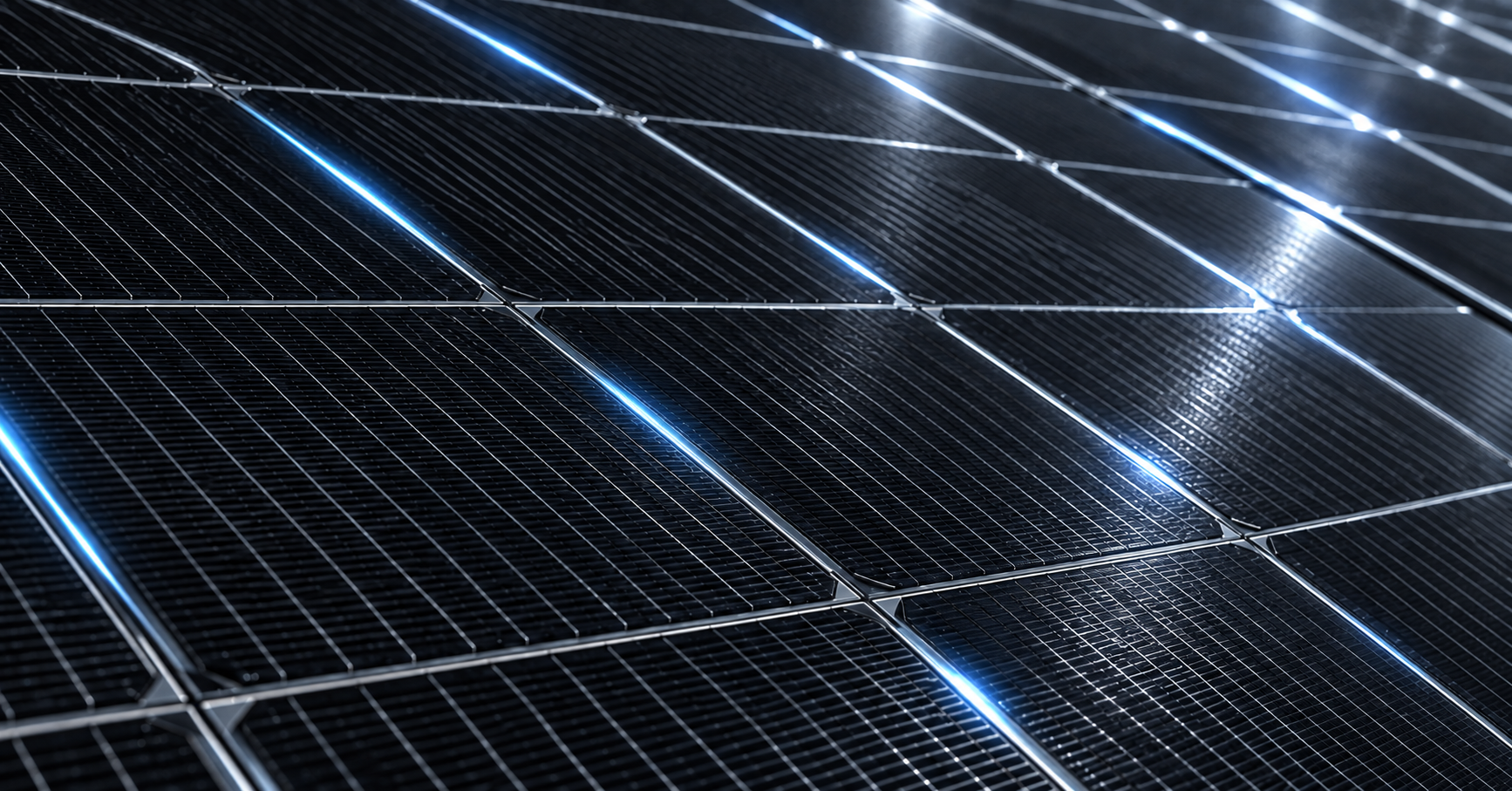
A bifacial module can generate electricity from light that reaches its front and rear surfaces. On a real site, the rear surface may see plenty of reflected light—or almost none. Its value depends on the surface below it and the way the array is mounted.
Where does the extra energy come from?
Some sunlight reaches the rear of a module after reflecting off the ground or roof. The amount depends on the surface below the array, how high the modules sit, the gap between rows, and anything that shades the back. A light-colored surface may reflect more sunlight than a dark one, but a reflective surface alone does not guarantee a large gain.
This is why a percentage printed in a brochure cannot stand in for a project estimate. The same module can perform differently on an open ground mount, a raised carport, and a low roof installation. NREL's bifacial modeling work considers surface reflectance, tilt, clearance, spacing, and shading together rather than treating rear-side gain as a fixed number.
Where is bifacial worth a closer look?
Ground-mounted arrays are a sensible starting point. There is often room beneath the modules and between rows for light to reach the rear surface. Carports and other elevated structures can offer similar exposure. On some commercial roofs, raised mounting above a light-colored membrane may also make bifacial modules worth modeling.
The case is weaker when modules sit close to a dark roof or are packed so tightly that the rear remains shaded. The system may still be an excellent solar installation; it simply should not be priced on the assumption of a large rear-side contribution. Mounting rails, cables, and nearby structures can also block rear light, so the detail of the support design matters.
Compare annual energy, not just module wattage
A higher nameplate power rating does not tell you how much energy a finished array will deliver over a year. For a fair comparison, model the candidate layouts at the same site, with realistic weather, surface reflectance, mounting height, row spacing, shading, and electrical losses. Then compare expected annual AC energy and the installed cost of each option.
Ask the designer to show the assumed rear-side contribution separately. If the result depends heavily on a very bright roof or unusually wide row spacing, check whether those conditions will actually exist after installation. The IEA PVPS report on bifacial modules and systems documents how strongly system design and ground conditions affect the outcome.
Module dimensions and handling also belong in the comparison. NOVASUN's 655W N-Type TOPCon bifacial panel and 720W bifacial dual-glass panel serve different layout needs. Before selecting either, confirm the module size, structural limits, mounting method, and inverter design for the project. A larger module is not automatically the better fit for every roof or support structure.
What information should you send for a useful comparison?
Start with the site location, the available area, and a few clear photos or drawings. For a roof, include the roof surface and any structural or access constraints. For a ground mount or carport, include the proposed mounting height, row layout, surface below the modules, and any nearby shading. If you already have a preliminary electrical design or target system size, send that too.
With those details, the discussion can move beyond a generic claim about bifacial gain. The right answer may be a bifacial layout with measurable rear-side production, or a simpler layout that uses the available space more effectively. If you are comparing options for a project, contact NOVASUN with the site information and the solar panel models you are considering.